by Dr. Lori Verderame
The Heywood Wakefield Company is an American furniture manufacturer and maker of wicker, mid century modern, classical revival and other style furniture pieces. The Heywood company was first established in 1826 by the Heywood brothers and their partner, the Wakefield company was founded in 1855. Both companies–rivals in the furniture industry–produced wicker furniture and rattan furniture for residential and commercial clients for many decades. Throughout the early to mid 19th century, both companies attracted clients with their innovative designs and strong wood furniture in the styles of the day. In 1897, the two companies, Heywood Brothers and Wakefield Company, merged to become Heywood Brothers & Wakefield Company. In 1921, the name was changed to Heywood-Wakefield Company, just as we know it today. Following the merger, the firm went on to buy out the following firms within their industry including the Washburn Heywood Chair Company, Oregon Chair Company, and Lloyd Manufacturing Company. Quickly Heywood Wakefield became the leader in modern furniture of the early to mid 1900s. They quickly established themselves as a leader in the furniture industry and designed pieces with the upper and middle class consumer in mind.
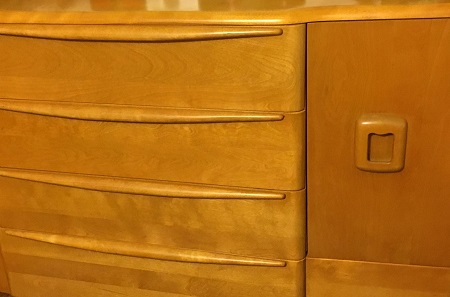
Heywood Wakefield’s wooden furniture was produced in its factory in Gardner, Massachusetts. The company produced furniture pieces in Gardner from its early beginnings until 1979. The firm opened another production plant in Michigan where other pieces of furniture were designed, produced, and manufactured. While early Heywood Wakefield designs were based on the late 19th Century and early 20th Century Aesthetic and Arts & Crafts movements, the firm was also open to offering new styles to its customers. Heywood Wakefield always remained dedicated to the use of natural materials, simple designs based on nature’s forms, and employment of contemporary construction methods. Early Heywood Wakefield chairs, chaise lounges, and sofas were made of rattan and wicker and often highlighted bamboo with intricate woven styles in the popular style of the day. Often upholstered pillows and cushioned mats were added to these wooden furniture pieces for extra style and comfort. By the 1920s, Heywood Wakefield’s lead designers, Paul Frankl and Donald Deskey, were introducing pieces based on the American Art Deco and French Art Moderne movements. These art movements came of age and continued to grow in popularity from the 1920s to the 1950s.
These quintessential Heywood Wakefield pieces became known as the California style of furniture dating from the late 1940s to the late 1960s. Heywood Wakefield was the choice for comfortable, good looking, modern furniture during the post World War II era. This style of mid century modern chairs as well as living room, dining room, and bedroom furniture became popular with young families and particularly, with teenagers. Some of the early motifs of Heywood Wakefield furniture featured criss-cross stretcher support bars and bamboo designs appeared in the modern style furniture and decorative arts magazines of the day.
Unlike Duncan Phyfe furniture or Eastlake furniture styles which have their own collectible following in the antiques and vintage furniture market, Heywood Wakefield furniture from the circa 1930s to the 1970s remains popular and valuable with today’s collectors of modern and mid century modern furniture on the international scene. Dining tables, sofa tables, desks, storage cabinets, tea carts, servers, buffets, vanities, stools, chairs, dressers, and many other forms of Heywood Wakefield furniture command very high prices on the vintage furniture and mid century modern market alike.
What to Look For
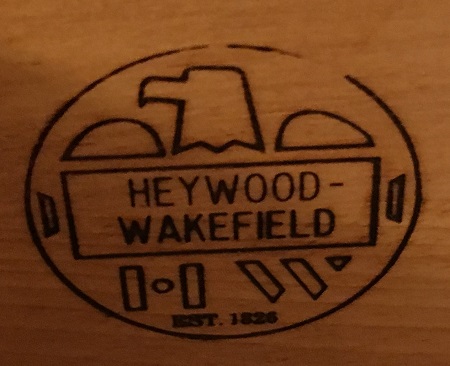
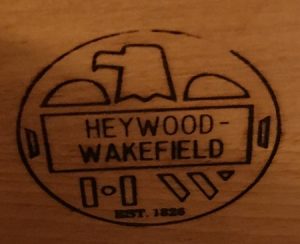
The firm began producing some of today’s most recognizable pieces like the double drop leaf Butterfly dining table with wishbone legs, hidden seat gossip table which is virtually a chair and desk in one, and tambour cabinets with rolling hide-away panel doors. Heywood Wakefield used a recognizable eagle logo trademark on its furniture pieces typically found on the side of the interior of a drawer or on the back or underside of its pieces of furniture like dining tables or tea carts. The organic forms and curved lines of Heywood Wakefield furniture is consistent with the trends of the mid 1900s which appeal to the style of Scandinavian design, popular at the time. Heywood Wakefield furniture features designs similar to those made famous in Scandinavia during the post war period and typically focuses on light colored or blond woods in stains called champagne, wheat, or blonde. Unlike other furniture manufacturers, Heywood Wakefield furniture typically has molded wooden handles or drawer pulls as opposed to applied metal hardware. It features curved wooden drawers, doors, and panels. Chairs, that is both side chairs and arm chairs, may or may not host any upholstered pads or cushioned mats. However, mid 20th Century modern era Heywood Wakefield seating furniture typically highlights organic forms on the back splat like rounds, ovals, kidney beans, and other natural shapes. Values for Heywood Wakefield furniture pieces regularly reach into the five and six figures internationally with matching sets like living room coffee and end tables or dining room sets commanding higher values.
Get an online appraisal of your Heywood Wakefield furniture pieces from Dr. Lori to find out what it is worth.